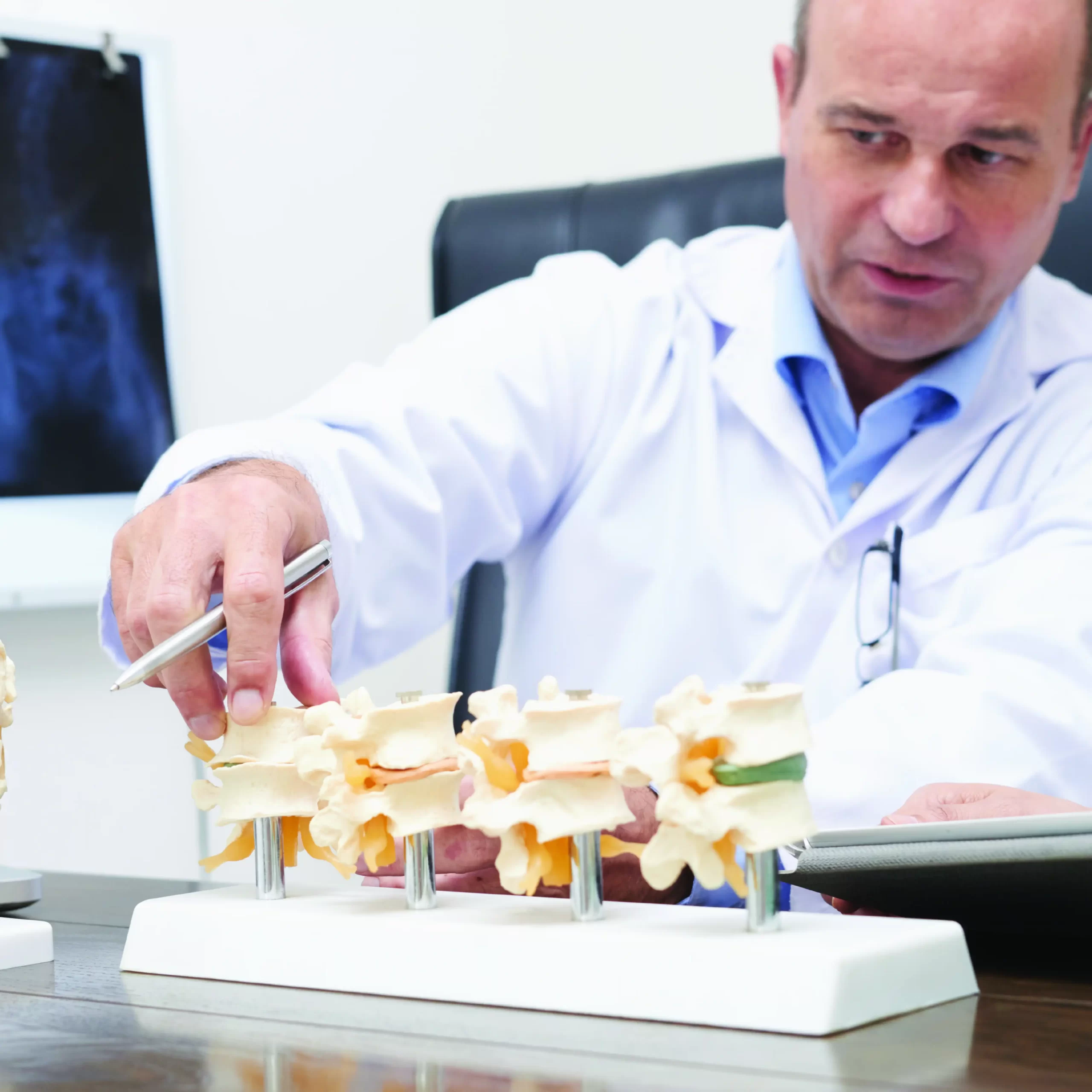
A herniated disc, also known as a slipped disc or mobile disc, occurs when the soft central part (nucleus pulposus) of an intervertebral disc pushes through a tear or split in the tough outer layer (annulus fibrosus). This may press on nearby nerves, causing pain, numbness, or weakness, particularly in the back, legs, or arms, depending on the location of the herniation.
Common symptoms of a herniated disc
lower back pain
It often extends down the leg (sciatica) if the herniation affects the lumbar spine.
neck pain
It may extend to the shoulder and arm if the herniation is in the cervical spine.
numbness or tingling
It is often felt in areas of the body supplied by the affected nerve.
weakness
In the muscles served by the affected nerves.
pain during movement
Especially when bending or lifting things.
Reasons
age-related decline
Cartilage loses moisture and elasticity with age.
Injury
As a result of sudden shocks or lifting heavy objects incorrectly.
repetitive stress
Due to poor posture or incorrect use of the body over time.
Injury
As a result of sudden shocks or lifting heavy objects incorrectly.
repetitive stress
Due to poor posture or incorrect use of the body over time.
Treatment options
Conservative treatments
Physical therapy
To strengthen abdominal muscles, improve posture, and reduce pressure on the spine.
Chiropractic treatment
Manual adjustments to relieve pressure on nerves.
Pain management
Using anti-inflammatory drugs, muscle relaxants, and sometimes steroid injections.
Edit activities
Avoid lifting heavy objects and strenuous activities.
Surgical options
It is resorted to if conservative treatments fail, or in cases of severe pressure on the nerves.
Surgery includes discectomy, microdiscectomy, and, in some cases, spinal fusion.
Managing a herniated disc requires a comprehensive approach that includes pain management, lifestyle modifications, and sometimes surgery, especially for severe cases.